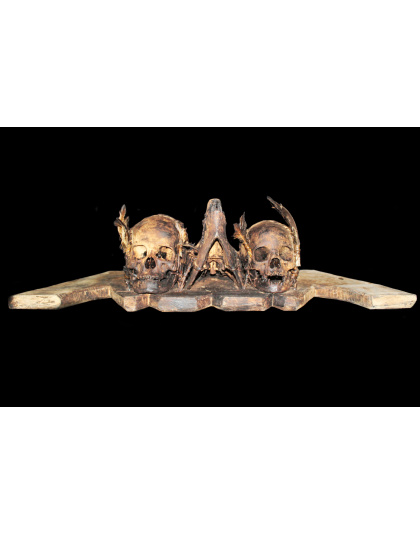
Bakun Benguet Native Priest's Carved Wooden Head / Skull (Mambunong Ritual Object)
Description
A carved wooden head/skull, from the estate of a native priest locally known as a "Mambunong," Kankanaey area, Bakun, Benguet. Wooden head: 7" x 4.7" x 4.7"; staff: 46".
Used in several ritual ceremonies, including those marking death or violent occurrences — for example the "Tomo" ritual, performed when a person is crazy, foolish, cruel, hot-tempered, or unable to sleep. When tomo was identified as the cause, a mambunong (native priest) was called to perform the ritual, typically away from the house: a group of men would be sent to fashion fern or wood into the shape of a human head and bring it to the ritual site, shouting as they approached to simulate a bygone headtaking practice. The mambunong meets the party, asks whose head was taken, receives their answer, gives the absolution, and a sacrificial dog is butchered and offered before the group shares the meal. The head is then hidden by the mambunong or a trusted elder. The tomo ritual is intended to ward off the spirits of those who died an unnatural death and to cleanse and purify a sick person from guilt and illness.
As recalled by the native priest's son, this wooden head had been in the family since he was a small boy; he was 53 years old when interviewed, dating the piece to roughly the 1940s–1950s. It has a stand that may double as the old man's staff.
Origin: Bakun, Benguet, Northern Luzon, Philippines
Why Buy from Philippine Tribal Arts?
- ✓ Authenticated collectibles
- ✓ Secure packaging & fast shipping
- ✓ 100% satisfaction guarantee
- ✓ Expert customer support